
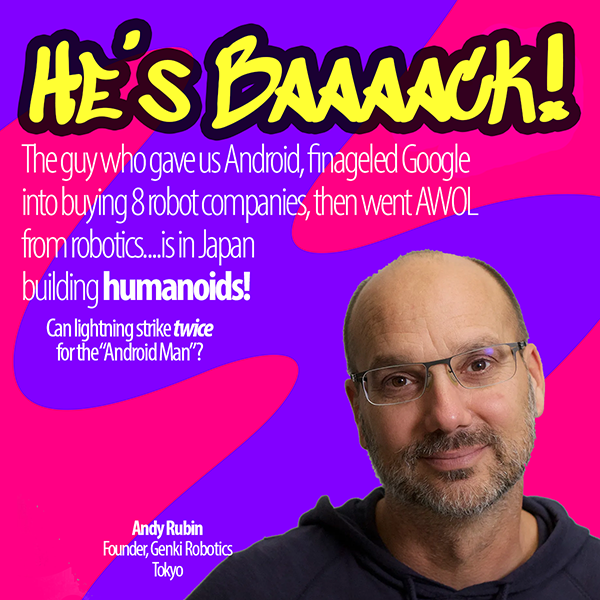
Then up popped Andy…in Tokyo
He’s back! Andy Rubin, who has been a robot zealot since Utica College in the 1980s, who later put the giddy-up in Android cellphones (selling his Android, Inc. to Google in 2005 for $50 million), picking up the moniker “Android Man” along the way, then finagled Google into buying 8 robotics companies for him to honcho in 2013 (cost still undisclosed), only to abandon it all in 2014 under a dark cloud of social misconduct.
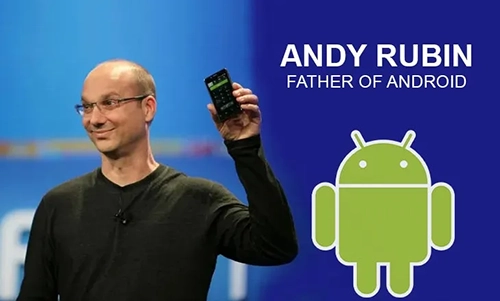
After disappearing from robotics for a decade, he has suddenly returned to robotics in 2025. But not in his familiar Silicon Valley haunts, rather, in Tokyo, Japan, where the 62-year-old tech genius from Chappaqua, NY, recently founded Genki Robotics, which is in stealth mode yet strongly hinting at something about its yen for building humanoid robots.
It’s a remarkable return for a man whose last decade has been marked by controversy, failed startups, and a conspicuous absence from the robotics revolution he once seemed destined to lead. But it also raises a provocative question that Asian Robotics Review has explored often: Can an American genius help Japan, a nation synonymous with robotics yet strangely absent from the artificial intelligence (AI) and humanoid robot race, finally compete with the breakneck pace of innovation coming from China, Korea, and the United States?
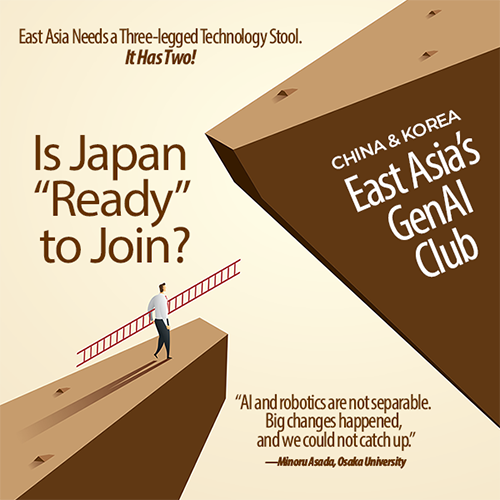
See related: Is Japan Ready to Join? East Asia’s GenAI Club
Genki Robotics’s vision “is to accelerate the integration of intelligent humanoids into society, augmenting human capability and shaping the future of work and service.” The company is backed by Andreessen Horowitz, and AMD, among others.
Backstory holds clues
To understand Rubin’s comeback, you have to search through the weeds of 2013, when Google went on one of the most ambitious acquisition sprees in robotics history. In just six months, Rubin orchestrated the purchase of eight robotics companies: Boston Dynamics, Schaft, Industrial Perception, Meka, Redwood Robotics, Bot & Dolly, Autofuss, and Holomni. Schaft, a University of Tokyo spinout that had impressed at the 2013 DARPA Robotics Challenge, might well be a future resource to Genki Robotics.
It was a stunning move. Google’s CEO Larry Page compared it to Android itself, a moonshot, calling it “a crazy idea” with world-changing potential. The vision was clear: Create consumer-friendly robots for everyday tasks, leveraging Google’s tech prowess, financial clout, and Rubin’s ability to spot transformative technology.
With Rubin’s departure from Google in 2014, the robotics division drifted without clear leadership. By 2017, none of the acquired companies had produced robots in use beyond Google’s offices. Key talent departed once their four-year stock options vested. Alphabet (formerly Google) sold Boston Dynamics to Japan’s SoftBank in 2017 for $100 million. The Japanese multinational also grabbed up Schaft in the process. SoftBank, in turn, sold its 80% interest to Hyundai in 2021 for $1.1 billion.
Immediately after his Google exit, Rubin founded Playground Global in 2015, “an effort to make it easier for Silicon Valley hardware startups to make their ideas real, a venture studio focused on hardware and robotics, raising $300 million from backers including Google, Foxconn, and Tencent. He founded Essential Products in 2015, releasing a premium smartphone in 2017 that flopped spectacularly in a market dominated by Apple and Samsung—a humbling reminder that past success for “Android Man” doesn’t guarantee future wins.
Why Tokyo?
Rubin’s choice of Tokyo isn’t random. It’s deeply strategic, rooted in both his past and Japan’s unique position in the robotics landscape.
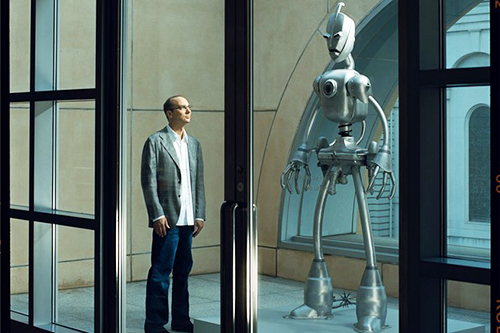
First, there’s history. One of those eight companies Google acquired in 2013 was Schaft, the Japanese startup that had been rejected by ten local investment firms before Rubin and Google swooped in. Through Schaft, Rubin gained direct access to Japan’s robotics ecosystem—the university labs, the precision engineering talent, the manufacturing expertise. Google even established a dedicated robotics division in Japan alongside its Palo Alto operations. In short, Rubin has history there.
Second, there’s talent. As Takashi Kato, Schaft’s co-founder, once observed, Japan harbors “a slew of intelligent scientists and engineers thirsty for money to develop next-generation technologies.” These are people who understand the nuances of humanoid locomotion and human-robot interaction at a level few countries can match. Japan’s robotics education and engineering research infrastructure remains world-class.
Third, there’s market need. Japan’s demographic crisis is real and accelerating. With a rapidly aging population and labor shortages across industries—from healthcare to retail to construction—the country has a genuine, urgent need for robotic assistance. This isn’t technological showmanship; it’s economic survival.
Japan’s humanoid paradox
Here’s the irony: Japan is synonymous with robotics, yet it’s mysteriously absent from the current artificial intelligence/humanoid boom. Why?
Honda’s ASIMO, once Japan’s poster child for advanced robotics, was discontinued in 2018, and then finally retired in 2022, just as the humanoid market was heating up. The program had become a cautionary tale: Launched in 2000 but preceded at Honda by some 15 years of R&D, ASIMO never really amounted to much. Expensive to build (each unit cost around $2.5 million), operate, and maintain, ASIMO, by 2022, was a 22-year-old machine with limited real-world utility; that’s a total of 37 years of development without stepping into the marketplace.
SoftBank’s Pepper (acquired from France’s Aldebaran), designed to be “the world’s first emotional robot,” met a similar fate. Despite approximately 17,000 units sold, they were perceived as mascots rather than workers, with fragile hardware, limited autonomy, and a rather silly, mousy voice. SoftBank stopped manufacturing Pepper in 2021. That’s two humanoid strikeouts for Japan in back-to-back years, with nothing equal or better for the foreseeable future, with the winds of artificial intelligence roaring through the tech world, except for Japan. A distinct high-tech double whammy for sure.
Meanwhile, Japan’s East Asian neighbors have surged ahead. China and Korea are racing to dominate humanoid robotics with massive government support and a determined focus on industrial applications to avoid an onrushing demographic crisis.
Badly Needed GenAI & AI Robotics Help for Japan

According to Vision Research: The global humanoid robot market [including components for both wheeled and bipedal] was valued at $1.35 billion in 2023 and it is predicted to surpass around $9.19 billion by 2033 with a CAGR of 21.14% from 2024 to 2033.
The added shock of UBTECH’s wake-up call
If Japan needed evidence that it’s falling behind, it has recently arrived in dramatic fashion. Shenzhen-based UBTECH Robotics, just achieved something no other humanoid maker has accomplished: mass delivery of hundreds of Walker S2 humanoid robots to active industrial facilities across China.
“This isn’t vaporware or concept demonstrations. UBTECH has secured over $113 million in orders from major automakers including BYD, Geely Auto, FAW Volkswagen, and Dongfeng Liuzhou Motor. Foxconn is deploying them for logistics. The company plans to ship 500 units by December’s end (2025) and is on track to meet that target.”
UBTECH’s stock price has climbed more than 150% this year, and the company now reports that humanoids represent 30% of its sales, up from just 10% last year.
Can Rubin’s Genki get Japan back in contention?
Details about Genki Robotics remain scarce. The company operates in stealth mode—no website, no public job postings—but Rubin has confirmed he’s living in Tokyo, assembling a team, and developing prototype humanoids designed for “vibrant and healthy” everyday movement.
The deeper question isn’t whether Rubin can build impressive robots—it’s whether he can help Japan overcome its systemic challenges in commercializing them.
Genki and SoftBank’s acquisition of ABB Robotics
Japan’s robotics industry has world-class research but a troubling track record of market failure. The country’s industrial robotics giants—Fanuc, Yaskawa Electric, Mitsubishi Electric—dominate factory automation (Fanuc controls over 70% of the global CNC systems market), but they’ve largely stayed away from humanoids. Why? Because the business case has been unclear, the costs prohibitive, and the technical challenges immense.
Recent developments suggest Japan may be positioning for a comeback. SoftBank’s acquisition of ABB’s robotics division signals renewed strategic focus. The country’s demographic crisis is finally creating undeniable market demand. And AI breakthroughs—large language models, reinforcement learning, vision-language-action models…and physical AI—have fundamentally changed what’s possible with humanoid robots.
Waiting for the Android Man
Rubin brings something Japan desperately needs, experience building ecosystems, not just products. Android’s success wasn’t just technical; it was about creating a platform in which developers, manufacturers, and consumers all wanted to participate. If Genki can position itself as an open platform leveraging Japan’s engineering talent while partnering with the country’s manufacturing giants, it could catalyze a broader Japanese humanoid renaissance.
See related: Japan’s Moonshot Moment: SoftBank, Robotics/AI & Takaichi Converge
But the challenges are formidable. Cost remains a massive barrier—developing and deploying humanoids requires enormous capital. Reliability is unproven at scale. And Rubin’s past controversies, however much he denies them, could affect investor confidence and partnership opportunities in Japan’s relationship-driven business culture.
The stealth phase won’t last forever. When Genki Robotics finally reveals what it’s building, the world will learn whether Japan’s humanoid robots will finally learn to walk and whether lightning will strike twice for the Android Man.