
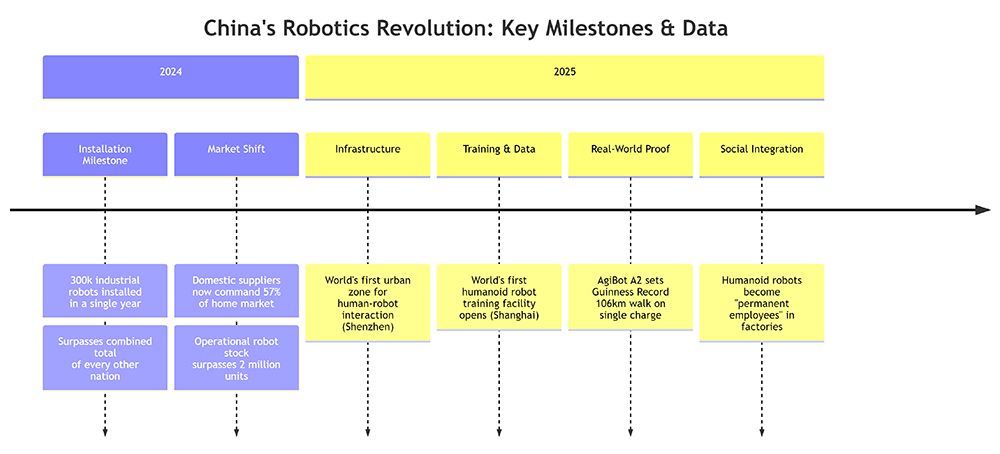
Chain reaction of self-sustaining innovation set into motion by Made in China 2025
“The evidence suggests that Chinese robotics has crossed a threshold—what might fairly be called in chain-reaction mode—where accumulated investments, infrastructure, talent, and market scale are now generating self-sustaining momentum.”
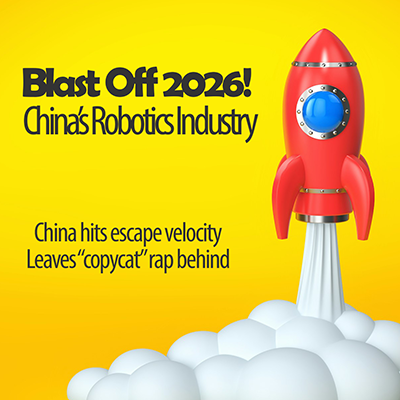
No time to ignore China
When 2025 passed into the record books in January, it brought to a close one of the most remarkable periods in global technology, especially robotics technology. The decades-long Made in China 2025 program came to a close, but not to an end. Rather, it prompted a new beginning. Something amazing happened in China from 2024 to 2025.
For decades, Western observers dismissed Chinese robotics as derivative—a vast copycat enterprise that reverse-engineered foreign technology and competed primarily on price. The judgment was often harsh but not entirely unfounded.
The last two years of Made in China, 2024-2025, witnessed something new and special: a swift and extraordinary transformation from the old copycat rap. The evidence suggests that Chinese robotics has crossed a threshold—what might fairly be called in chain-reaction mode—where accumulated investments, infrastructure, talent, and market scale are now generating self-sustaining momentum. There’s a chain reaction cranking up that’s both brilliantly original and essential for robotics technology.
See related: “Made in China 2025 “The Role of Robotics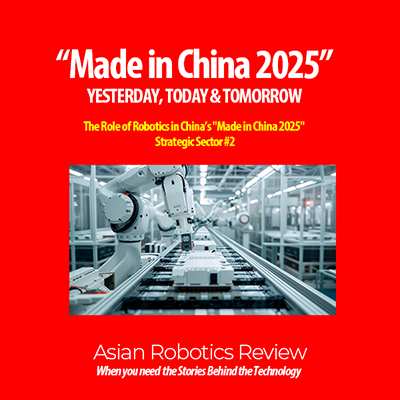 The Chinese innovation reactor has gone critical; China in 2026 is no longer just a global manufacturing hub but is now defining the future standards of a robot-integrated society and economy.
As Martin Casado and Anne Neuberger noted in a recent Andreessen Horowitz blog: “Only ten years ago we scoffed that ‘China can copy, but they can’t innovate,’ which we then revised to, ‘They can innovate, but they can’t make the upstream high-precision tooling.’ Maybe we shouldn’t have been so comfortable.”
Bing, bang, boom, in ten short years, China transitioned itself from being a relatively passive automation user to creating a comprehensive ecosystem that includes AI-integrated factories, specialized robot training facilities, and even urban zones redesigned for human-robot coexistence.
High-profile achievements such as humanoid robots becoming permanent factory employees signal that these technologies have moved from experimental phases to practical, large-scale deployments. This strategic shift creates a compounding competitive advantage, as the massive scale of operation generates the massive data necessary to continuously refine manufacturing efficiency.
Because of China, technology took a huge step up that Washington is only just now beginning to take seriously.
According to a December (2025) report by Politico, “Commerce Secretary Howard Lutnick has been meeting with robotics industry CEOs and is “all in” on accelerating the industry’s development, and, the article furthers, “The administration is considering issuing an executive order on robotics next year.”
The White House merely “considering” an executive order on robotics for 2026 is downright and totally flabbergasting. It will be way too little way too late. Doing lots in response right now might be a more useful tactic!
If the scene flipped and America’s robotics industry had had the same outstanding year that China’s robotics industry just concluded for 2025, 60 Minutes would have featured it on a Sunday evening special, China’s top roboticists would be gracing Jimmy Fallon and other late-night talk shows, and Unitree’s humanoid robots would be popping out of McDonald’s Happy Meals.
China’s blastoff!
What began in 2015 with China taking on the Made in China 2025 challenge (during its 13th Five-Year Plan (2016-2020))–when it was decidedly in a weaker tech position–has now evolved into a total remake of its robotics ecosystem, and better yet, is fueling a robotics/AI innovation engine that’s in chain reaction mode.
In an extensive review, The U.S.-China Economic and Security Review Commission, evaluated China’s decades journey: Made in China 2025 vaulted the country’s high-tech manufacturing, achieving significant progress in domestic capabilities, and innovation (especially in EVs, robotics, new materials).
The metaphor of a chain reaction captures something essential about this moment. In nuclear physics, it’s when nuclear fission accumulates mass sufficient for self-sustaining reactions. The technical specifics differ, but the dynamics are analogous: China’s robotics sector has accumulated enough patents, components, capital, talent, and market demand that innovation now generates more innovation without proportional external inputs.
For Western observers accustomed to dismissing Chinese technology as imitative, this is an uncomfortable reality. For the global robotics industry, it’s the defining competitive fact of the coming decade. The chain reaction is underway. The only question is how long China can sustain the chain reaction and how the rest of the world responds.
China’s rapid acceleration forces the rest of the world to reconsider the global landscape of technological and economic power.
In short, unless America and Europe put the pedal to the metal by inaugurating similar Made in China programs for their own countries, the West will never catch up.
China is currently undergoing a massive industrial transformation, installing more robots (300k) than all other nations combined, while rapidly achieving domestic technological independence (domestic robot production at 58% of total deployed).
The chain reaction’s net-net for China
What’s perhaps most remarkable about China’s 2024 and 2025 achievements is that they represent not a culmination but an acceleration. The robotics revolution that experts have long predicted is no longer a future possibility.
The infrastructure being built today—robotics R&D hubs with developer supply chains less than fifty miles distant (an ecosystem that allows for rapid prototyping and manufacturing); robot training facilities or “data factories” (Beijing and Shanghai); robot-friendly cities for open-air robot training, integrating robots and autonomous vehicles into daily life (Shenzhen), and AI-robot integration platforms, and manufacturing ecosystems—(Midea’s factories) creates the foundation for even faster progress ahead. Each installed robot generates data that improves the next generation. Each optimized factory workflow reveals new opportunities for automation. Each successful deployment in one sector provides templates for expansion into others.
It’s happening now, at a pace and scale that has surprised even optimistic forecasters. And China is actively defining what that age will look like—one factory, one training facility, and one robot-friendly city at a time.
The world’s factory is becoming the world’s robotics laboratory, and the experiments are yielding results that will shape manufacturing, commerce, and daily life for generations to come.
See related: The Rise of China’s Robotics Industry: Modernize or Perish!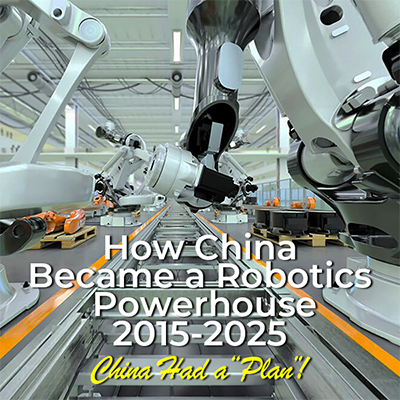
The question facing other nations is no longer whether robotics will transform industry, but how quickly they can build their own ecosystems to remain competitive in an era increasingly defined by human-robot collaboration at unprecedented scale.
Achieving technological independence is wonderful. Doing it rapidly is amazing and admirable. But doing it alone, without America being neck and neck in the race, is cause for alarm…and mega-reaction, not simply an executive order by the Trump Administration. Catching up with China’s robotics chain reaction will take extraordinary and unprecedented effort, cash, and conviction.
Perhaps, copying Made in China 2025 would be an ideal place to begin.