
Better call a robot
In the sewage pipes beneath the streets of London when cooking oil, urine, feces, and paper congeal together into a pipe-blocking blob that sometimes gets rock hard, it’s called a fatberg. Think, iceberg without the ice. The remedy in London is for Thames Water, UK’s largest water and wastewater services company, to break up the fatberg. Recently, a team of water engineers spent a month blasting and chiseling a behemoth 100-ton fatberg loose from 30 feet down under the streets of west London.
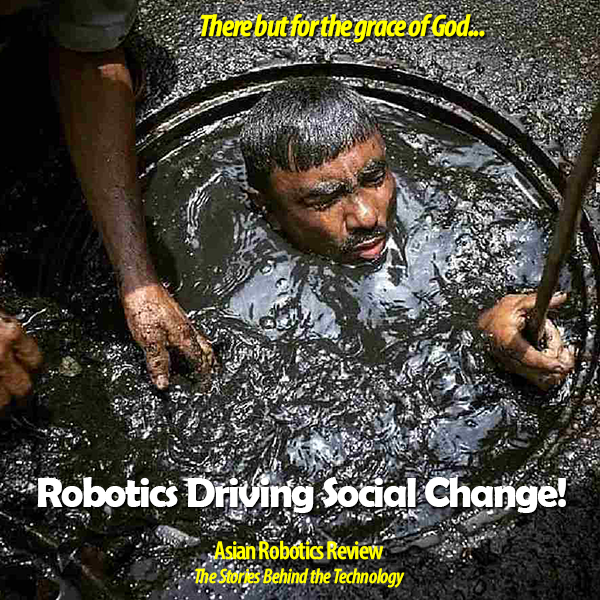
In India’s Delhi, population 34 million, there’s no team of water engineers to remedy a fatberg or fecal clog from the city’s 70-year-old sewage pipes, a human worker with a rope around his waist, tunnel shovel in hand, is lowered into the noxious, polluted muck to scape and jimmy the pipes free. In India, there are some 58,000 such individuals (called “manual scavengers”) who perform what is arguably the poster child of dull, dirty, and dangerous jobs. Reportedly, 75% of these manual scavengers are women. India is not alone when it comes to clearing pipes by manual scavenging, Pakistan and Bangladesh employ the same practice.
15 other large cities around the world share the same sanitation problem. A Water Resources Report wrote: “Globally, the number of urban residents who lack safely managed sanitation has increased to nearly 2.3 billion, costing $223 billion a year in health costs, lost productivity and wages. Unsafely managed sanitation even affects people who do have access, as contamination can spread via polluted water, food, or through contact with flies.” The scourge of cholera is spread through the fecal-oral route. It is estimated that annually 297,000 children under five die each year from diarrhea linked to inadequate water, sanitation, and hygiene. Manual scavengers are viewed as necessary for maintaining safe sanitation for millions of others, but their own lives can be brief and filled with disease and danger.
Although, manual scavenging has been illegal in India since 2013, it’s still widely practiced, with scavengers frequently exposed to numerous pathogens for diseases such as hepatitis, tetanus, and cholera, plus exposure to poisonous gases like hydrogen sulfide. Officially, according to government data, 377 persons have died from 2019 to 2023 due to hazardous cleaning of sewers and septic tanks. Unofficially, there are reports that 200 scavengers are annually killed on the job.
Robotics as a permanent remedy
Manual scavenging—the act of physically entering sewer lines, septic tanks, or manholes to clean or unclog them—is one of the world’s most dangerous and dehumanizing jobs. The persistence of this practice underscores the deep technical and social challenges of urban sanitation, spanning poverty, regulatory gaps, and social ostracism.
A new wave of Indian robotics innovation is confronting these challenges and pioneering robot systems to eradicate manual scavenging:
Genrobotics
Genrobotics was founded with a revolutionary vision: to eradicate the inhuman practice of manual scavenging through technological innovation. Their mission is to replace human entry into lethal sewer lines and septic tanks with advanced robotic solutions, ensuring safety, dignity, and efficiency.
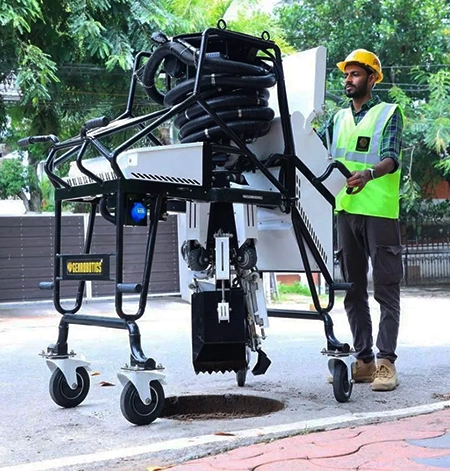
The company’s flagship product, Bandicoot, is a world-class robotic scavenger. This humanoid-style robot, operated remotely from the surface, uses articulated arms and advanced tools to perform the complex tasks of cleaning manholes—from scooping sludge to clearing blockages, providing a robust, effective alternative to human labor.
Solinas Integrity
Solinas Integrity is driven by a vision to preserve water and sanitation infrastructure while eliminating the need for human entry into confined, hazardous spaces. Their mission focuses on developing robotics and AI solutions for preventing water loss and contamination, thereby addressing a root cause of pipeline failures.
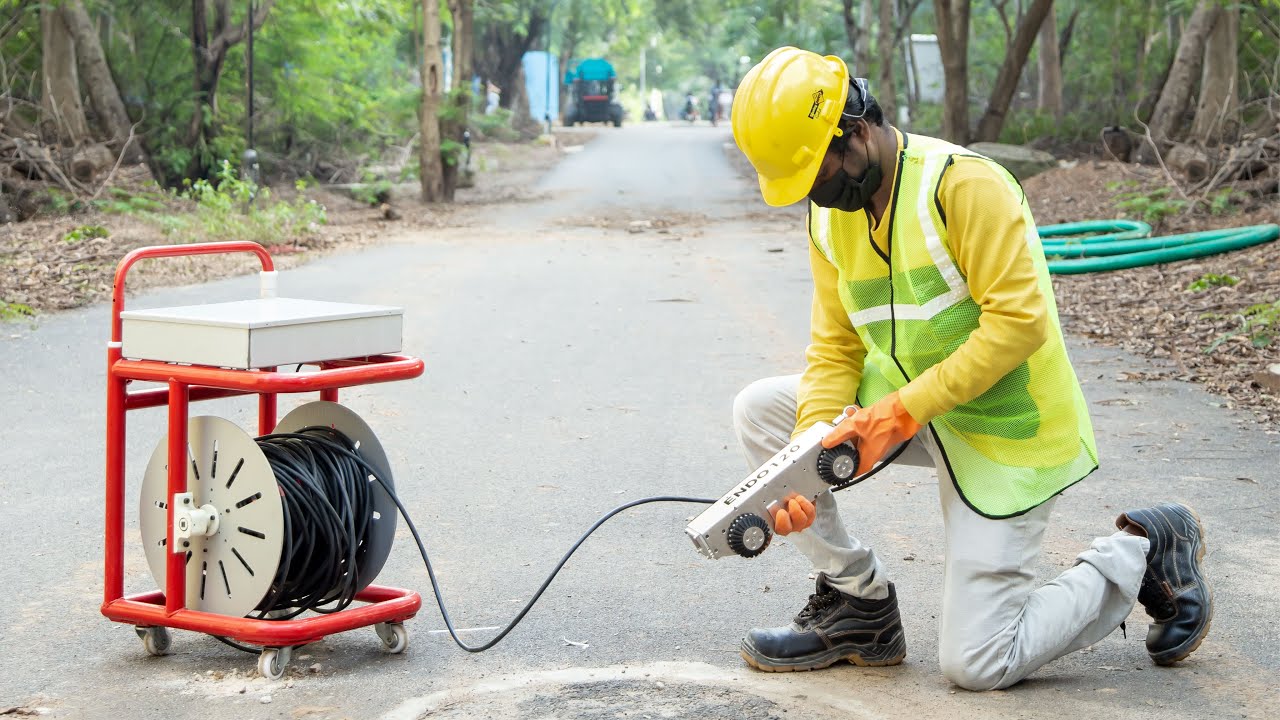
The company brings a multi-pronged approach with products like Endobot, a pipeline inspection robot that detects cracks and leaks in real-time, and HomoSEP, a robot that crushes solid waste in septic tanks. By focusing on preventative diagnostics and mechanized cleaning, Solinas not only removes humans from direct danger but also promotes a proactive maintenance model that enhances the longevity and reliability of sewer and water systems.
Sakar Robotics
Sakar Robots is an Indian startup, born from the research labs of IIT-Hyderabad, with a mission to eradicate the practice of manual scavenging through technological intervention. The company’s vision is to create a future where no human life is risked in septic tanks or sewer lines, replaced entirely by intelligent, robotic systems. Saakaar developed the Garbage Vanquishing Robot (GVR), a remote-operated machine designed specifically for cleaning manholes and other confined sanitation spaces. The GVR is engineered to navigate challenging environments, breaking down solid waste and removing sludge without the need for human entry.
While Genrobotics leads in technology and socio-technical impact, Solinas Integrity is gaining ground by addressing needs in smaller, under-served urban and rural communities. Both companies exemplify a wave of robotics firms focused not only on efficiency and safety but also on tackling entrenched social inequities.
Robotics, India, and long-term solutions
What makes robotics such a robust solution in South Asia’s context?
RISK ELIMINATION: By replacing human entry into hazardous environments, robots save lives and eliminate a major vector for disease.
SCALABILITY: Robotics solutions can scale to the millions of urban and rural sanitation points, providing consistent, safe, and reliable service.
SOCIOECONOMIC TRANSFORMATION: Robotics-based sanitation upgrades the dignity of labor, often allowing former manual laborers to transition into skilled operators or technicians, with higher wages and safer working conditions.
The pipes ahead
While technological solutions are necessary, the sanitation crisis also demands continued financial, regulatory, and community engagement. Investments in robotics, paired with education, policy reform, and infrastructure development, offer the clearest path to eradicating both unsafe sanitation and the horrors of manual scavenging.
India’s evolving sanitation ecosystem, anchored in robotics innovation, provides a replicable model for global progress in health, equity, and human rights. Equally valuable for each of these young startups is how exportable their tech is to anywhere in South Asia and beyond.