

SONY says humanoids are flawed
With the humanoid horse way out of the barn and dragging wagonfuls of investment cash along with it, now along comes SONY with the red flag of humanoid “flaw” raised high. What’s up with that?
According to Crunchbase, VCs have invested $955 million in humanoid deals as of May 2025, a definite wagonload when contrasted to a full year of VC humanoid deals that netted $380 million in 2023. Record-breaking was 2024: Tracxn reports that 2024 saw the highest amount of funding in the last decade, with more than $999 million in total; and over $2 billion to-date invested in bipedal humanoid robots. Note the massive uptick in the last 18 months. In short, humanoid robots are going big-time in a hurry.

America’s NVIDIA and Taiwan’s Foxconn formed a joint venture to mass-produce humanoids by the hundreds of thousands. China’s Unitree is rolling out an IPO that wants to challenge the NVIDIA/Foxconn marriage. World governments China, Korea, Canada, and the United Kingdom, reports the International Federation of Robotics, are heaping even more cash into the mix, directly investing in or providing significant funding for their domestic humanoid robot producers.
China’s UBTECH just scored a $1 billion humanoid investment, while claiming to have a $35 million procurement contract for its humanoids (unknown customer), reportedly the largest single order for humanoid robots globally. Humanoids are also reported working for BMW, Mercedes, and at a Spanx warehouse, as well as a host of tryout jobs and other minor gigs globally.
In short, humanoids are really getting to be big business, with some even fixing to scale up factories to meet projected needs that are forecast to be eye-popping.
Not to mention the people side of things, with thousands of engineers and their tech colleagues who have poured blood, sweat, and tears into getting their bi-pedal creations up, running, and market-ready.
Now comes SONY
Now, with all that money, power, and technology ramping up, what’s up with the SONY claim of flawed humanoids? Or, as backup to SONY, the trickle of news stories saying the same thing, like MIT Technology Review’s recent Why the Humanoid Workforce Is Running Late.
Anyone with half an eye, robotics engineer or otherwise, can take one look at any of the present-day humanoids and instantly conclude that they are stiff, rigid, and awkward in everything they do. Unitree’s machines may be a bit of an exception, but not much. Definitely, all are not ready for prime time. There’s a big something missing in all humanoids, which everyone knows, yet few are talking much about.
The frenzy of media buzz outshouting everything else is reminiscent of the autonomous auto craziness, before Level 5 became a dream. After the bubble burst on Level 5, things deflated a lot in a hurry.
SONY’s Robotics Lab (operating under the umbrella, SONY AI) has blurted out what others seem too quiet to tell: humanoids are flawed. SONY’s Robotics Lab has gravitas. When it speaks on the topic of robotics, people stop, listen, and take serious note.
See Also: Proprioception:
Is This Humanity’s Special Something That Forever Sets Us Apart from Robots & AI?
Here’s the core argument, according to SONY: The core issue is that humanoid robots tend to be designed around software that controls everything centrally.
This centrality, this “brain-first” approach results in physically unnatural machines. “Athletes move with grace and efficiency because their bodies are a symphony of compliant joints, flexible spines, and spring-like tendons. A humanoid robot, by contrast, is a rigid assembly of metal and motors, connected by joints with limited degrees of freedom.”
Daniela Rus, MIT’s director of CSAIL, nailed the flaw: “Embodied intelligence. We often assume that intelligence lives in the brain or the [AI]model. [But] the physical body helps compute behavior: muscles tune stiffness, tendons absorb energy.
“In robotics, this means designing systems that don’t just execute plans, but respond intelligently through their materials and morphology. Embodied intelligence allows machines to adapt in real time, because intelligence is distributed across the whole system, not just encoded in software.”
Bingo!

See also: The Many Faces of Humanoids

In humans, embodied intelligence is everywhere. The recent discovery of our mini-brain residing in the heart is a case in point. Called, Intrinsic Cardiac Nervous System (ICNS), this mini-brain is embedded intelligence within the heart’s tissues. “This system consists of ganglia and interneurons that provide local control, enabling precise modulation of cardiac activities.”
So, what is SONY’s inconvenient truth about humanoids that not many, not even major players in robotics, seem to want to address? Basically, the lack of embodied intelligence in all of today’s humanoids, even as they currently trickle into the marketplace and into deployments, are already legacy machines. They are already outmoded, outdated technology. Bottom line, sad, but true: who’ll buy them?
SONY is advocating new “flexible structural mechanisms” – in essence, smarter physical bodies – to create the dynamic motion that is currently missing.
Sure, somewhere on the spectrum of dull, dirty, and dangerous jobs, there will always be a place for humanoid robots sans embodied intelligence. However, buyers, as with everything else, will want more for less, even for mundane jobs or just bragging rights. Over time, as prices for embodied intelligence in humanoids plummet, legacy humanoids will either be retrofitted or else stack up in overstock warehouses for fire sales.
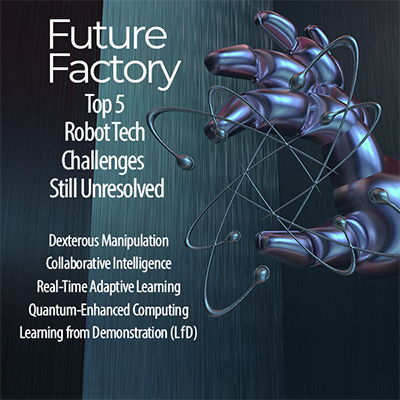
See also:Top 5 Robot Tech Challenges Still Unresolved
The incumbent’s dilemma: Timing the new paradigm
SONY’s philosophical argument poses a brutally practical question: Is it too late? Has the industry, hurtling toward commercialization, locked itself into a rigid paradigm, or can it adapt to incorporate this smarter-body philosophy?
The answer is not a simple yes or no. It is a story of parallel paths, where near-term commercialization and long-term R&D are diverging, with a future convergence all but inevitable.
For the well-funded startups and established players with robots already in pilot programs, SONY’s critique is academically understood but commercially inconvenient. Their business model hinges on a rapid timeline: demonstrate utility, secure partnerships, scale manufacturing, and achieve ROI. A fundamental redesign of their core physical architecture would be catastrophic to this timeline.
These existing humanoids—such as those from Figure, Agility Robotics’ Digit, and Tesla’s Optimus—are built around a specific actuator and structural philosophy. Their software stacks, the millions of lines of code that make them walk and grasp, are painstakingly tuned to the precise physical properties of their bodies.
The inertia of each limb, the torque of every motor, and the compliance of every joint are hard-coded variables in a complex physics simulation running in real-time.
To suddenly introduce a flexible spine or novel tendon-based actuators would be akin to giving an Olympic sprinter a completely new skeletal structure and muscle type and asking them to run the same race tomorrow. The entire control software would need to be scrapped and rewritten from the ground up. The capital investment in specialized manufacturing lines for their current parts would be rendered obsolete.
Thank you, SONY
SONY AI is undoubtedly correct. The “brain-first” approach is a necessary first step, but it is a biological dead-end. The path to true versatility and efficiency lies in embodying intelligence in the very materials and mechanisms of the robot’s body.
Hopefully, the billions of dollars and frantic pace of today’s market are not wasted. They are funding the creation of the crucial software infrastructure, supply chains, and market validation that the entire industry needs. The current robots are the practical, if clumsy, pioneers proving there is a demand.
The appeal of the clumsy, pioneering humanoid in a roiling marketplace might well be very short-lived. The R&D for the next physical paradigm is already underway in labs and awaiting its moment. The course change is not a matter of “if” but “when.”