

Nagging Flaws
Hinder
Humanoids
Real-world problems persist as humanoid ecosystems rattle onward
“Making a humanoid robot do something genuinely useful remains extremely difficult, and that difficulty shows up in several places.” —Albert van Breemen
Yes, humanoids are running marathons, albeit, with multiple pit stops where crews of humans attend to their lubrication, batteries, balance and other mechanical needs. But still, a machine running any race is very impressive, nonetheless. Humanoids are quickly closing in on some fantastic achievements. Albert van Breemen, CEO and Founder of VBTI (Netherlands), has just returned from Shenzhen with an interesting take on the current crop of humanoid robots. He was kind enough to share his thoughts with our readers.
by Albert van Breemen,
CEO and Founder of VBTI
“All humanoid robots dance, and not one of them works.”
That quote captures one of my biggest impressions from visiting robotics and AI companies in Shenzhen. There is enormous energy here, and the speed of progress is real. But there is also a clear gap between what looks impressive in a demo and what is actually useful in the real world.
What I have seen in China is that many companies are building hardware for humanoid robots, and they are moving incredibly fast. The hardware ecosystem is developing at remarkable speed: robotic bodies, hands, actuators, sensors, and complete humanoid platforms are improving month by month. If you only look at the physical systems, it is easy to come away impressed.
But the real bottleneck is not hardware. The real bottleneck is software, AI, and data.
Making a humanoid robot do something genuinely useful remains extremely difficult, and that difficulty shows up in several places.
The first is computer vision. A robot needs to understand its environment well enough to operate safely and effectively in it. That sounds obvious, but in practice it remains very hard. A human can walk into a room, instantly recognize objects, understand context, and adapt to small changes. Robots still struggle with that level of real-world understanding.
The second challenge is dexterity, especially in the hands. There are already many impressive robot hands on the market, including highly advanced five-fingered designs. But having the hardware is one thing; controlling it is another. Fine motor skills, gripping irregular objects, adjusting force, and handling tasks reliably all still depend on software that is far from mature.
The third challenge is motion planning. Getting a robot to move through a changing environment and perform useful tasks is still not straightforward. Walking, reaching, turning, recovering from mistakes, and coordinating actions in real time remain difficult problems. The body may be ready, but the intelligence that makes the body practical is still catching up.
So what is needed next?
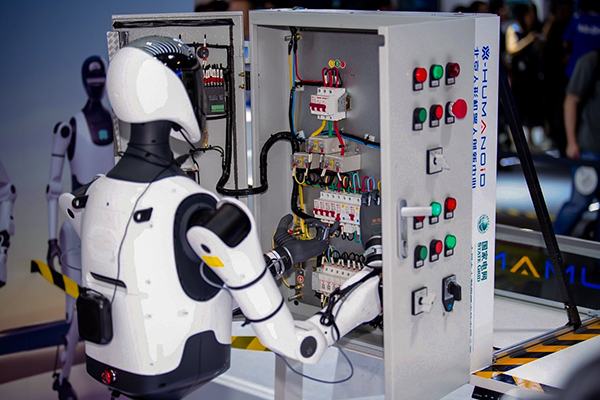
First, the industry needs applications that fit today’s technology. Instead of chasing science fiction, companies need robotic use cases that are valuable right now — useful enough that customers are willing to pay €100,000 for a working robotic system. That means focusing on tasks where the environment is structured enough, the value is high enough, and the performance is reliable enough to justify real deployment.
Second, we need much more data to train a new generation of AI models for robotics. Progress in modern AI has always depended on data, and robotics will be no different. That may require entirely new kinds of data factories: systems and environments designed specifically to generate large-scale, high-quality datasets for robotic learning.
Third, we need new AI approaches for robotics. Most current AI has been developed for data types like text, images, and sound. But robotics is different. Here, AI must control physical machines acting in the real world. It has to deal with uncertainty, movement, force, timing, and constant feedback from the environment.
Most importantly, these systems should not only learn offline, in the lab, or overnight. They should learn on the job.
What is equally striking is the human side of what is happening here.
Many Chinese companies are powered by a young generation of highly motivated people with real pride in building products. There is a sense of urgency, ambition, and commitment that creates enormous innovation energy.
And that may be the deeper lesson from Shenzhen: here, innovation is not seen as a cost. It is seen as the price of staying relevant. In too many European contexts, R&D is still treated primarily as an expense to manage.
But innovation is exactly what keeps a business alive in the future.
Shenzhen makes that painfully clear: if you want to remain relevant, you have to keep building.

About
Dr. Albert van Breemen is an expert in Artificial Intelligence and Robotics, currently serving as the CEO and Founder of VBTI, a company focused on deep learning for industrial applications. Ph.D. in Mechatronics & M.Sc. in Electrical Engineering (University of Twente). Former senior scientist at Philips Research, pioneering animation principles in robotics.